|
Concise History of the 10th Wing and its Airfield
“FORTUNA FAVET FORTIBUS” |
||||||||||||||||||||||||||
|
|
||||||||||||||||||||||||||
|
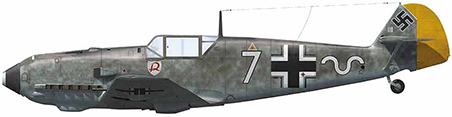
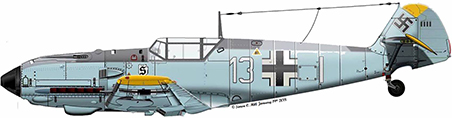
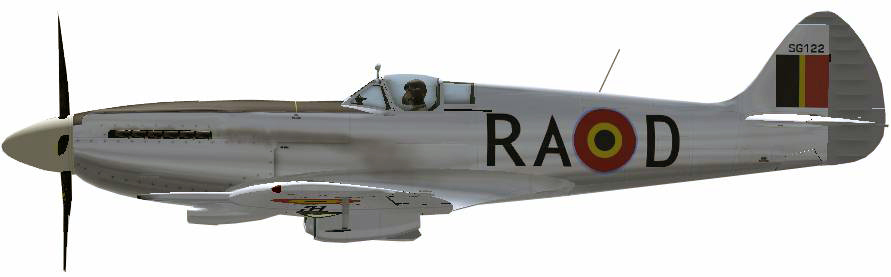
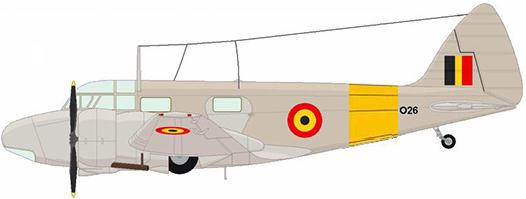
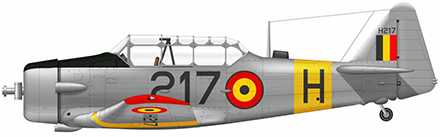
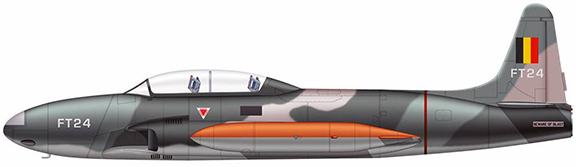
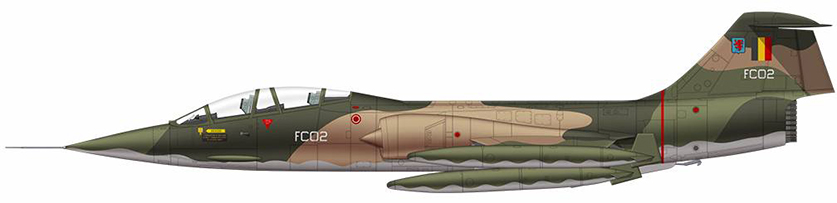
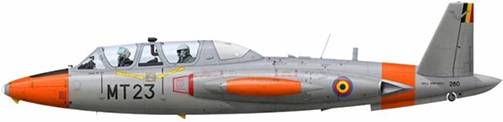
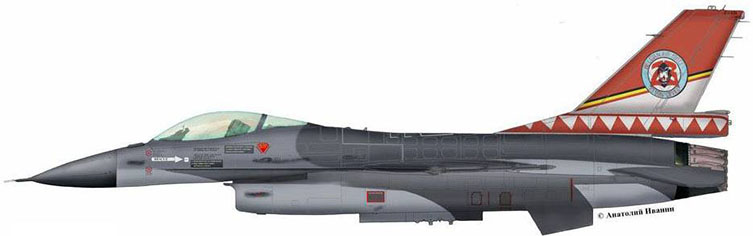
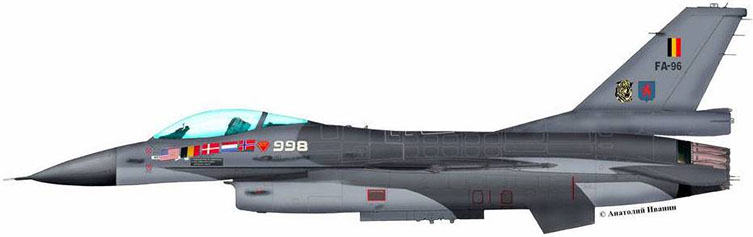
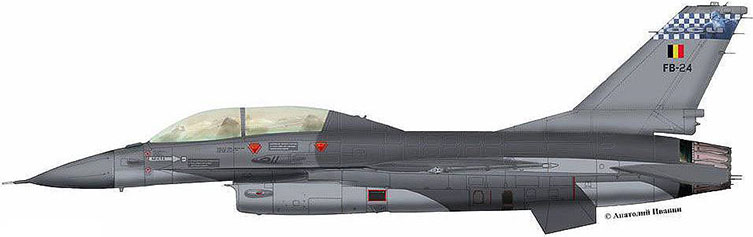
(all aircraft are to scale) The 10th Tactical Wing, better known under its initials 10 W TAC or even Kee-Bee (for Kleine-Brogel Air Base), was born on November 29th, 1951 when the then Chief of Staff of the Air Force decided to form 3 squadrons using resources from the 7th Wing at Chièveres A.B., namely the 23rd, 27th & 31st, in order to form the 10th Fighter-Bomber Wing with an airbase in Germany as final destination. Kleine-brogel was for the first time listed in the 1930's as a private airfield. It was used by Luftwaffe fighters from II./Jagdgeschwader 2 'Richthofen' and III./Jagdgeschwader 26 'Schlageter', operating the Messerschmitt Bf.109E, for several days in May 1940, then fell into disuse.
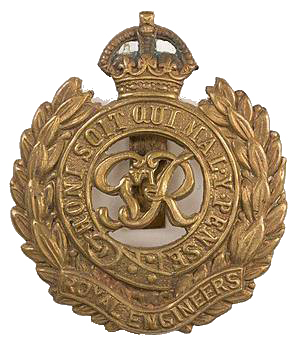
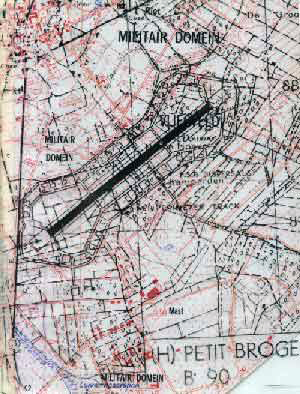
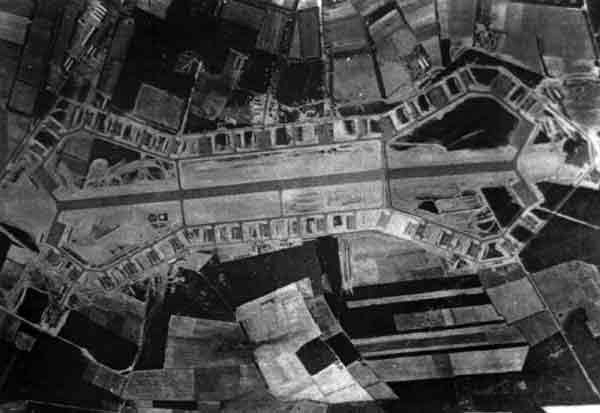
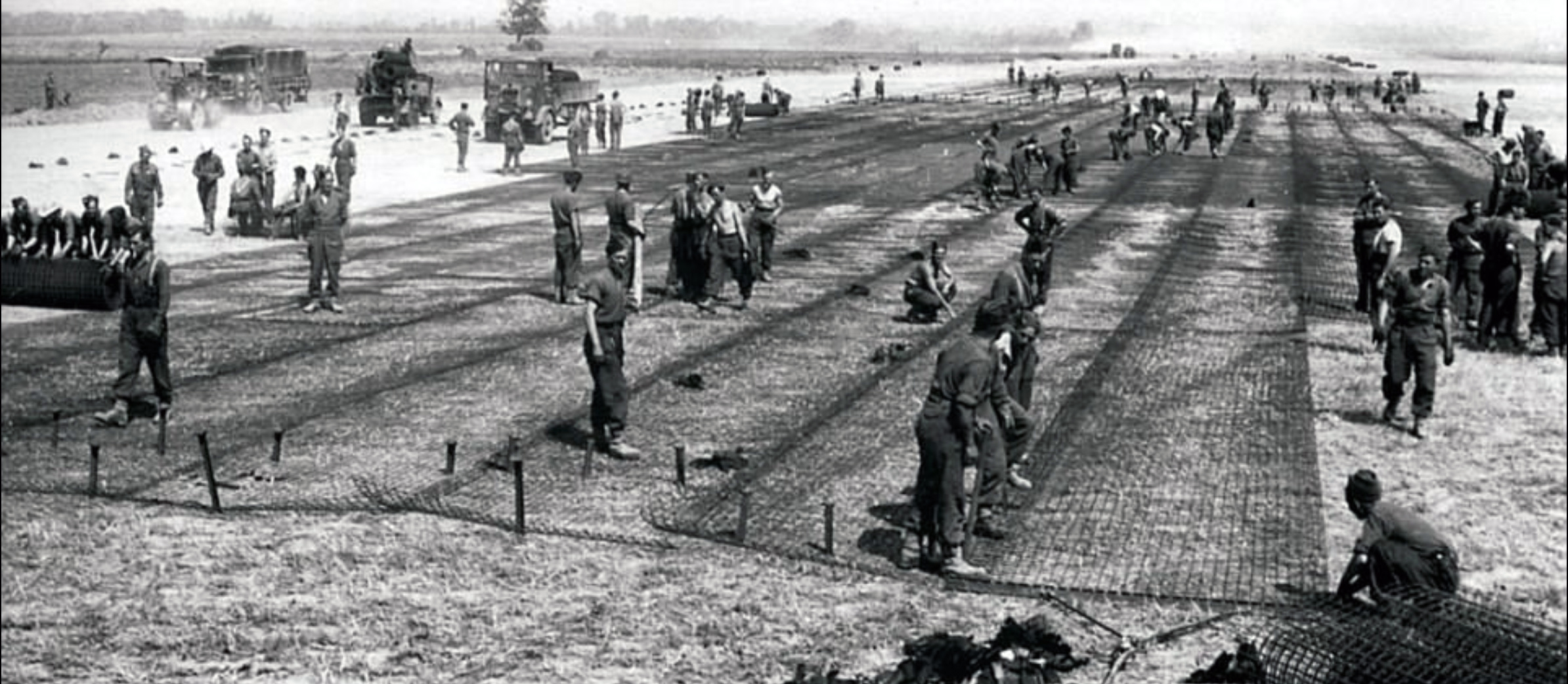
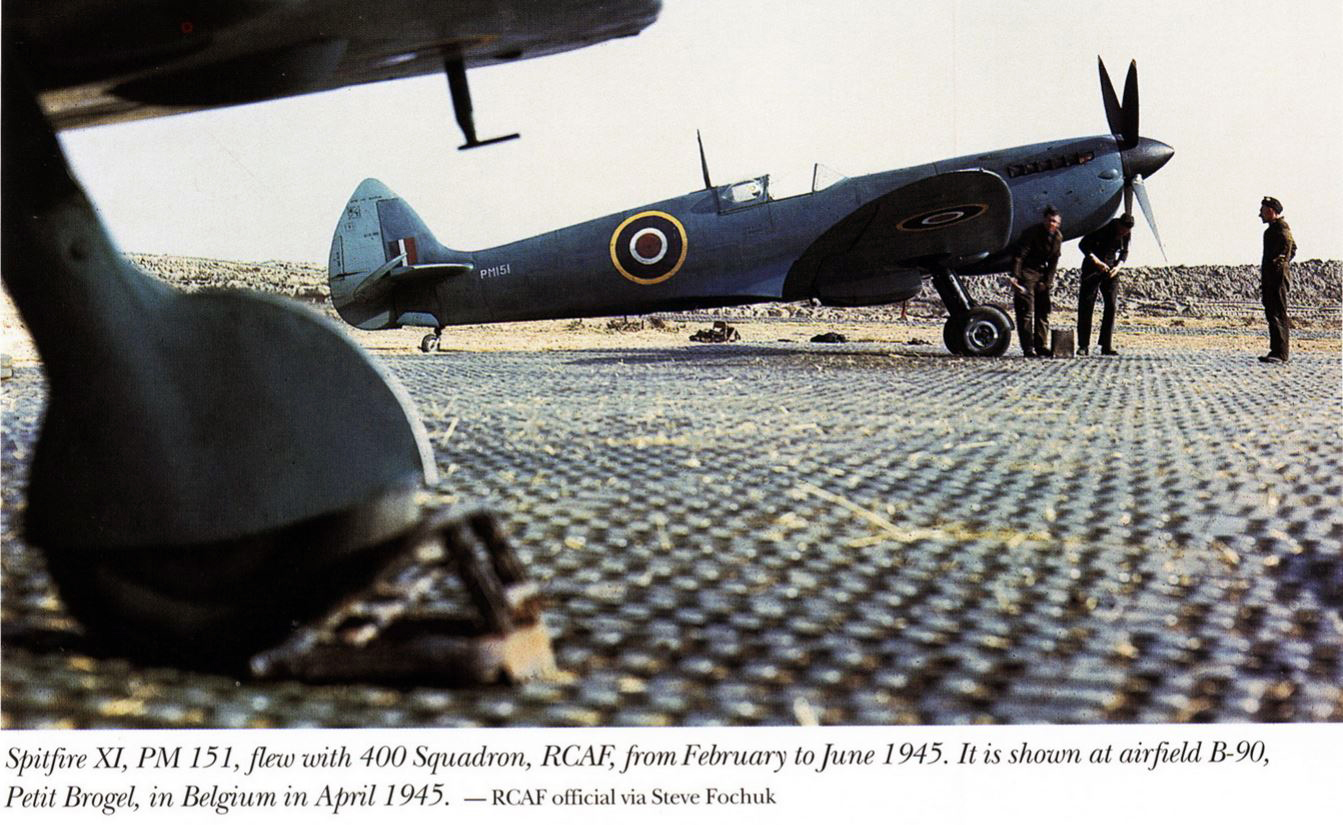
On 15 December 1944 the 16th Airfield Construction Group, Royal Engineers, British Army, started with the contruction of a temporary airfield with runway, taxi tracks and shelters for aircraft. This aifield received the codenamed B90. It was being built for the British 2nd Tactical Air Force (2 TAF) to keep up with the rapidly advancing ground troops since the Normandy landings and to provide continuous air support in preparation for and in support of the Allies crossing the Rhine.
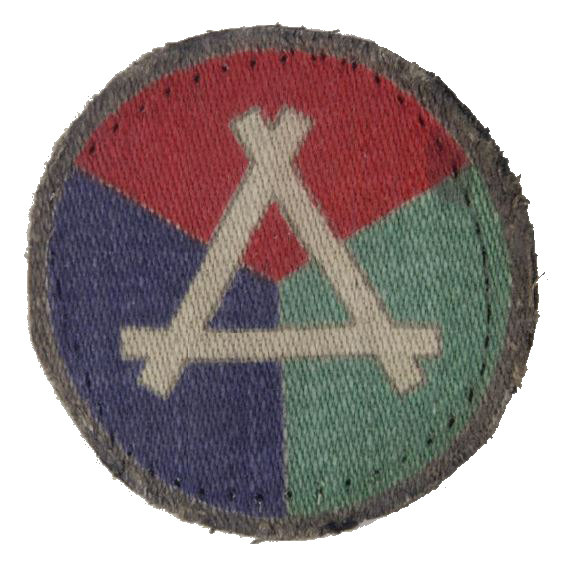
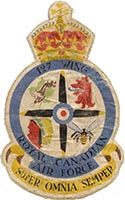
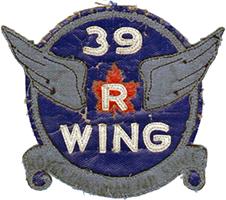
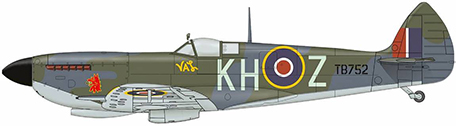
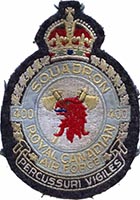
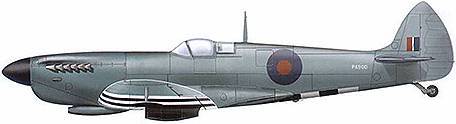
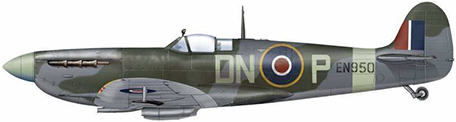
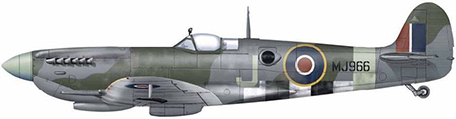
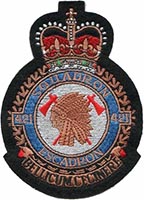
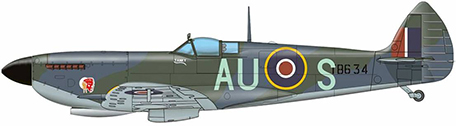
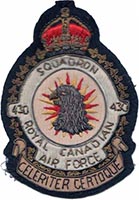
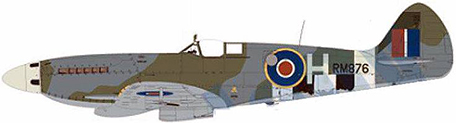
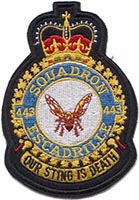
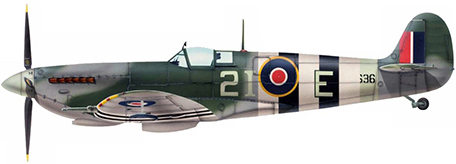
B90 Brogel becomes operational on 1 March 1945 and is home to No. 127 (Fighter) Wing of the Royal Canadian Air Force, consisting of Nos. 403, 416, 421 & 443 Sqns. On 7 March 1945 No. 39 (Reconnaissance) Wing, RCAF, consisting of Nos. 400, 414 and 430 Sqns arrived at B90. The wings are operating several types of the Supermarine Spitfire.
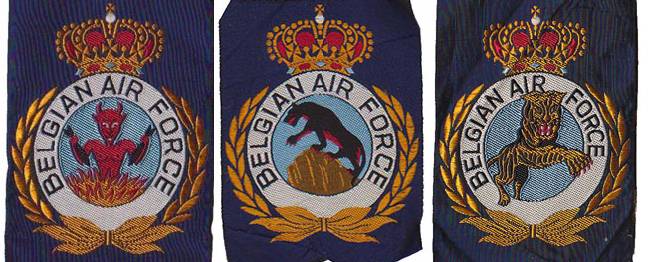
End of September 1945 the last RCAF-personnel leaves Kleine-Brogel. 8 October 1945 a small Belgian caretaker detachemen arrives. When the Belgian government announces on 26 March 1946 that the Belgian Army is no longer interested in the airfield the original owners reclaim their land. The abandoned military airfield is repossessed on 12 June 1951 by the Belgian Air Force. This as a part of a major program for expanding the Belgian Air Force and its bases as a result of the deteriorated political relations with the Soviet Union (f.e. Korean War) during the Cold War. 9 July 1951 the 10th Fighter-Day Wing is established with memorandum AO46/51. It decides that on 1 September the 23rd Smaldeel "Devils" (code Z6) in Chièvres and the 27th Smd. "Panthers" (code RA) in Florennes will be established and on 1 october 1951 the 31st Smd. "Tigers" (code 8S) in Beauvechain, with Spitfires XIV and equipment taken from the 2nd Fighter-Day Wing. The memorandum also states that in 1952 the squadrons will be equipped with the F-84E and that the airfield for the 10th Wing will be determined at a later date.
As a result of the too rapid expansion of the Air Force, the planning is regularly revised. According to AO59/51 (15 October 1951) the command personnel of the 23rd, 27th and 31st must now move to Chièvres. The last Spitfires stayed in the Wing until the middle of 1952. In 1952 the Wing used 5 Airspeed Oxford aircraft as liaison aircraft. They also received 1 Harvard for Instrument Training. The Harvard left the Wing after 1 year.
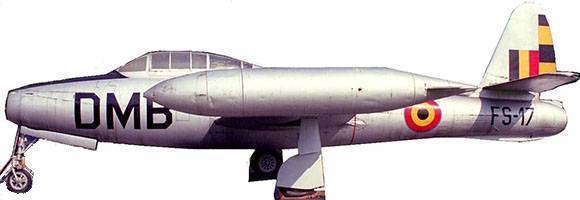
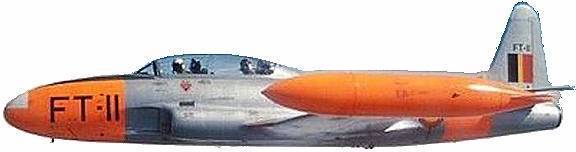
1 June 1952 : Lieutenant-Colonel Aviator du Monceau de Bergendal becomes Commander of the 10th Wing. The conversion of the 27th Smaldeel to the F-84E/G Thunderjet began in mid-1952, followed in the winter by the 23rd Smaldeel. Due to a lack of sufficient aircraft, the 31st Smaldeel was not converted and only continued to exist administratively as a unit. At the same time the Wing recevied 2 T-33's for the required annual instrument qualification flights.
24 Februari 1953 was the date of the official move of the 23rd and 27th to Kleine-Brogel. 31 followed them on 20 March.
Due
to cracks in the new runway the squadrons were obliged to move, first on
13 May 1953 to Geilenkirchen (D) and later to Bruggen (D), Sylt (D),
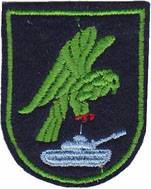
Bierset (B) and Weelde (B). 17 September 1953 the squadrons and the Wing are no longer considered as "fighter-day" units, but are now "fighter-bomber" : 10 Jacht-Bommenwerpers Wing (Fighter-Bomber Wing). The patch shows a falcon above a tank. She depicts the task of 10JBW: to launch attacks on the armor of the Warshaw Pact.
Convertion to the Republic F-84E/G Thunderjet is completed in 1953.
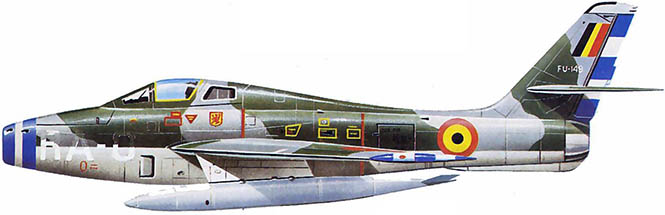
The 31st Smaldeel is the last unit to return to Kleine-Brogel, on 28 January 1955. In April 1956 the 27th Smd. had it's last flight with the F-84E & G, followed by the 23rd early June. All aircraft were assigned to the 31st untill end of June. June 1956 is a big milestone in the history of Kleine-Brogel due to the arrival of the new Republic F-84F “Thunderstreak”.
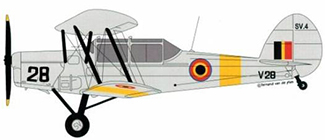
The T-33's left the 10th Wing one by one in 1958. In 1960 the 27th Smaldeel was transformed to an "Operational Training Unit" for the new F-84F pilots. During 1961 the 10th Wing started with a conventional QRA (Quick Reaction Alert). (currently in rotation with the 2nd Wing) From 30 August 1961 untill March 1963 Stampe & Vertongen SV4B (V28) was stationned in Brogel for use by the Belgian Air Cadets in Oostmalle.
4 June 1962 was a dark day for the 27th Squadron, due to reorganisations within the Belgian Air Force it was disbanded. Untill 1962 the aircraft belonged to a certain squadron. Each squadron had its own technicians and support personnel. This allowed them to move as a complete unit to any airport anywhere in the event of war and then operate completely autonomously. As this was a very expensive system a switch to centralized maintenance was made. This means that the aircraft no longer belong to a specific squadron, but are assigned to specific flights. This made the specific squadron codes disappear. In the 10th Wing, the rudder and Wing tips receive the colors of the three squadrons 23 : red / 37 ; blue / 31 : yellow). Although, over time, some 'illegal' squadron markings still popped up here and there... 18 June 1962 : As a result of the dissolution of the Fighter School, a Flight VZZ (Vliegen Zonder Zicht - Flying Without Sight) is established within the 31st Smd., equipped with 11 Lockheed T-33 two-seaters, with the task of training in and standardization of instrument flying. On 24 November 1963 the unit moved to Chièvres Air Base.
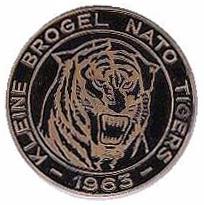
Between 27 - 30 August 1963 Kleine-Brogel was for the first time host of the Nato Tiger Meet. The other participans were 79 TFS (USAF), EC 1/12 (FAF), 74 (F) Sqn (RAF), 439 Sqn (RCAF), JG 72/2 (GAF), 53 TFS (USAFE) and AG 52 (GAF).
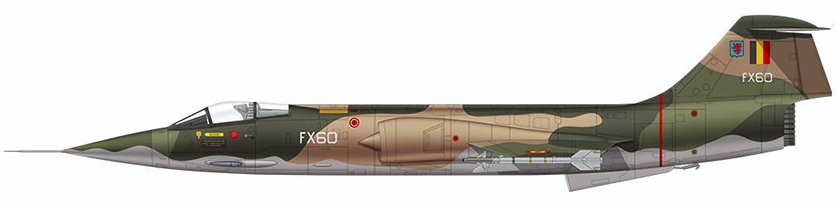
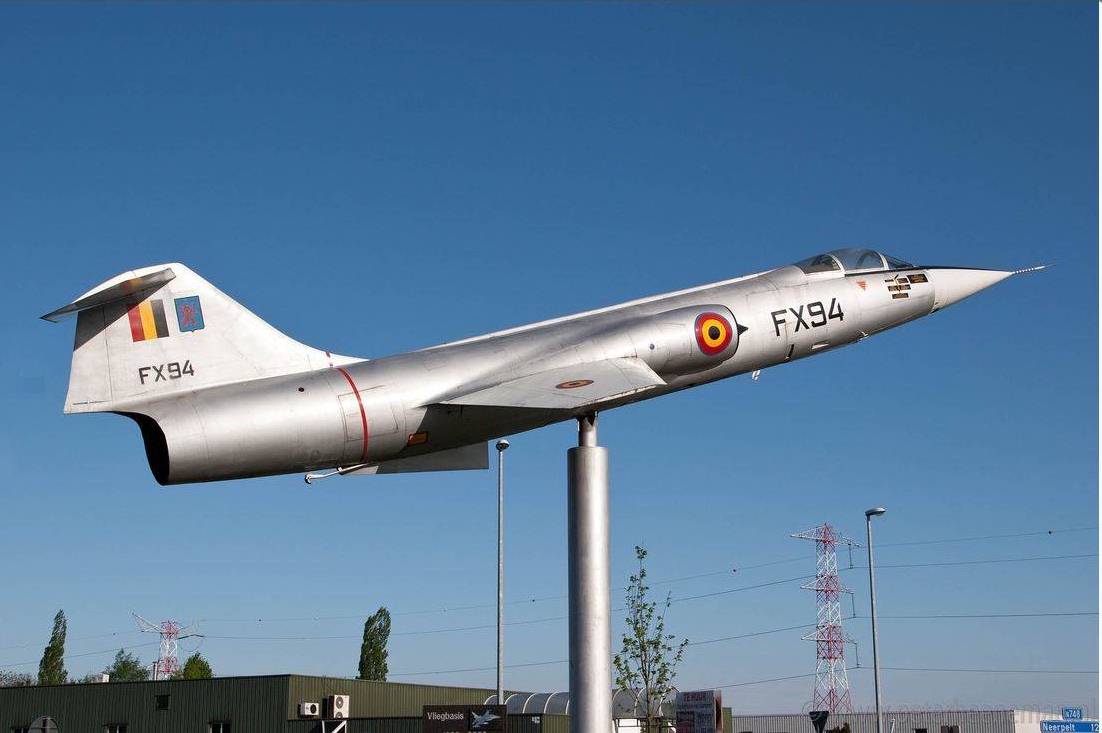
No matter how great the merits of the F-84F were, progress doesn't stop, and so the Streak had to make way for the F-104G “Starfighter” in 1964. The first one arrived at Kee-Bee on 6 April 1964.
The “TF Flight” is established in December 1968. From that date this Flight will operate the TF-104G;s owned by the Wing and will take care of the conversions to F-104G It is also responsible for the management of the flight simulator.
The Thunderstreak remained in service with the Belgian Air Force until May 1972. In 1980 it was decided to establish a "Flight Fouga" on every airbase to allow staff officers to achieve their flying hours. 3 Fouga CM-170-1 Magister were delivered to Kleine-Brogel on 2 april.
On 28 June 1982 the last flight of the TF-Flight takes place with four single-seaters and two double-seaters.
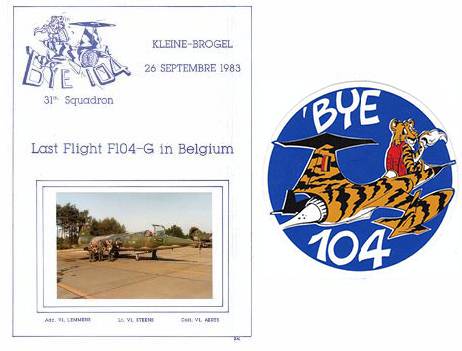
The last flight on Starfighter took place on 26 September
1983.
The 10th Wing got its first F-16A "Fighting Falcon", the type of aircraft it is still operating, on 30 November 1981.
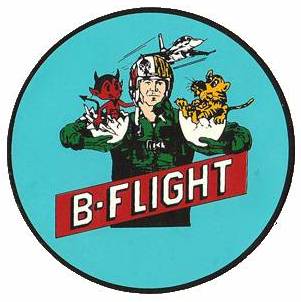
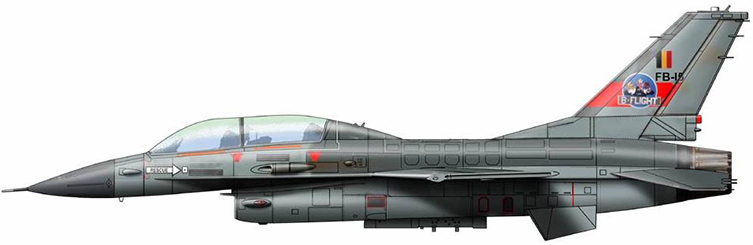
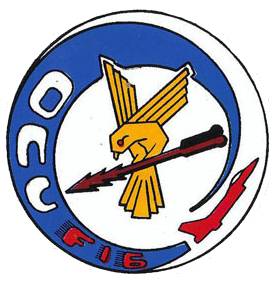
Originally new F-16 pilots were trained on the F-16B two-seaters used by the "Operational Conversion Flight F16". On 25-Nov-1983 this unit was renamed in "B-Flight".
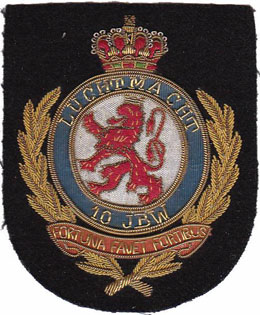
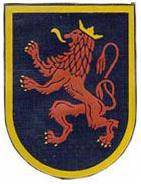
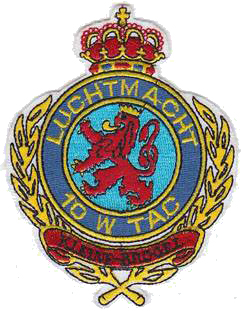
On 1 September 1987 the name 10th Fighter-Bomber Wing (10JBW) was changed into 10th Tactical Wing (10WTAC). This also included a change in the unit patch. The 10th JBW already chose the red lion as its unofficial emblem, to underline the connection with the province of Limburg, and now could make it official.
The Flight Fouga was disbanded on 8 January 1988.
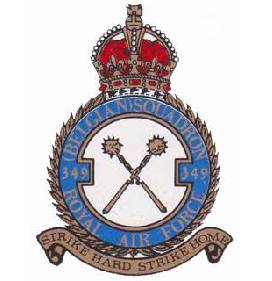
Upon disbandment of the 1st Fighter Wing on 4 March 1996, the 349th
(Fighter) Squadron
"Mace"
and the Operational Conversion Unit
"Vulture"
joined the 10th Wing.
F-16AM (single-seat) and F-16BM (2-seat) are the designations for the modernized F-16s as part of the Midlife Update (MLU) program since 1998. In the 21st century the 10th Wing provides combat ready personnel in peacetime, crisis and conflict, for homeland and deployed offensive operations, like Allied Force, Baltic Air Policing, Decisive Endeavour, Deliberate Forge, Deliberated Guard, Desert Falcon, Determined Falcon, Eastern Eagle, Enhanced Vigilant Activities, Guardian Falcon, ISAF, Inherent Resolve, Odyssey Dawn, Unified Protector, etc. As a sign and recognition of the 10WTAC's good relations with the city of Peer (of which Kleine-Brogel is a part) F-104G 'FX94' was placed as a monument on the access road to the city on 16 November 2004.
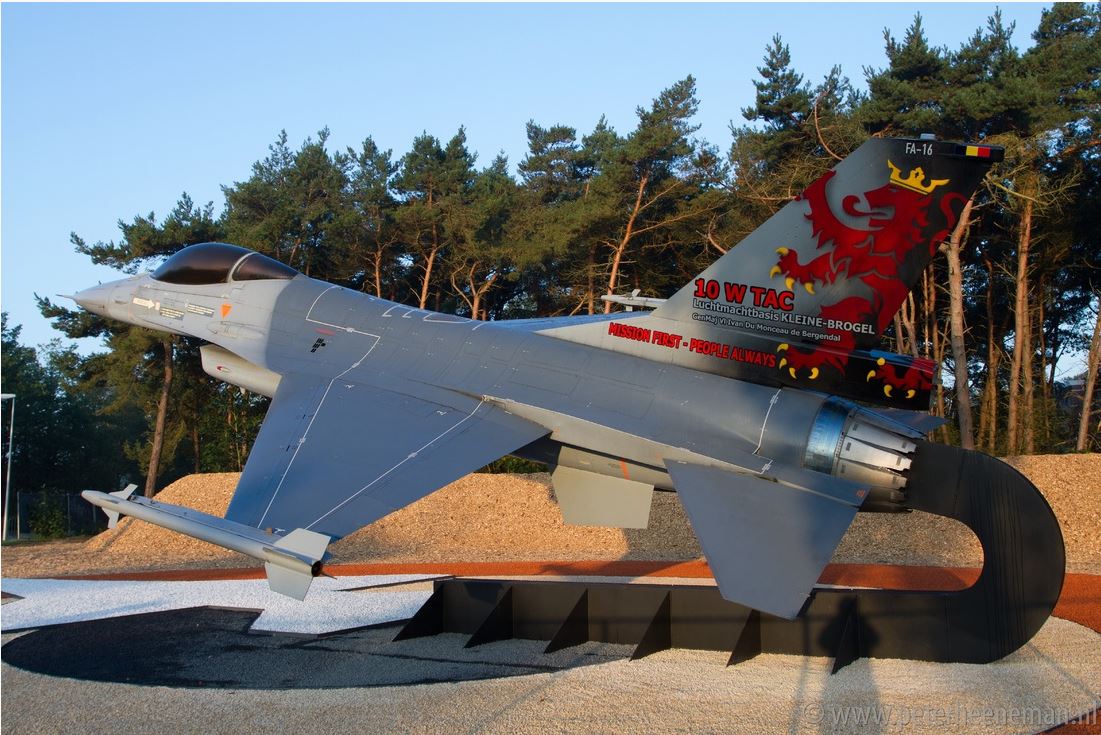
On 2 September 2014 the FA-16 gate-guard was inaugurated.
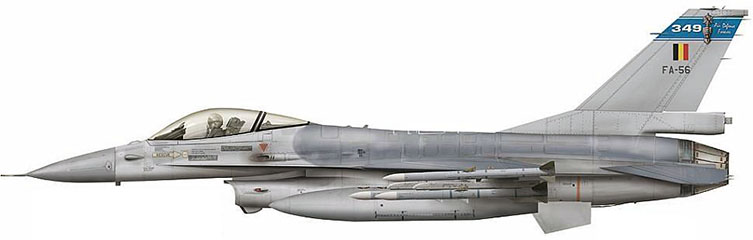
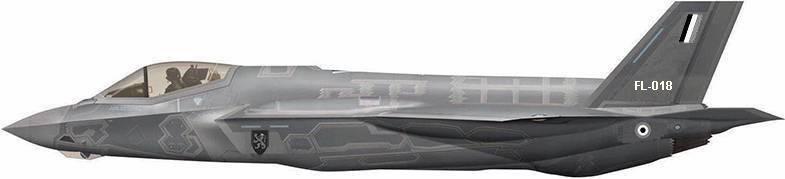
349 (F) Squadron is currently specialized in air defense and the 31 Squadron in all forms of ground attack. The first of 17 Lockheed Martin F-34 Lightning II is planned to arrive in Kleine-Brogel in 2027 to replace the F-16.
The arrival in 1962 of United States Air Forces in Europe Custodial Unit "Detachment 0600" made clear that the 10th Wing not only has a conventional job to do in case of war. Currently the 701st Munitions Support Squadron USAFE is attached to the Wing.
|
||||||||||||||||||||||||||
|
|
||||||||||||||||||||||||||
| text & picture sources : own collection & the world wide web / No copyright infringement intended, drawings and photos belong to the rightful owners. | ||||||||||||||||||||||||||
|
|
||||||||||||||||||||||||||
|
|
||||||||||||||||||||||||||